Why Competitions Are the Real Classroom for Speech & Debate Students
July 22, 2026
By Honor Academy · Los Angeles County and Orange County, CA · Competitive Speech & Debate Coaches
Every speech and debate coach has said some version of this sentence: “You’ll learn more from one tournament than from weeks of practice.” It sounds like a motivational line. It isn’t. It’s a fair description of what actually happens when a student walks into a room, faces a judge they’ve never met, and argues against an opponent they’ve never seen before.
Here’s why competitions aren’t the icing on a speech and debate education — they’re the main course.
The Math Behind Tournament Experience
Consider what a single tournament actually demands of a student. In one day, they may deliver the same speech or argument three, four, five times — each time to a different judge, against a different opponent, under real time pressure, with real consequences for how they perform. They adjust on the fly. They recover from a stumble in round two before round three starts. They watch how a more experienced competitor handles a question they couldn’t answer, and they steal that move for their own toolkit an hour later.
That density of pressure, feedback, and adaptation is difficult to recreate anywhere else. It’s why coaches often say that one tournament experience is equal to 20 to 30 hours of coaching sessions — and it’s not an exaggeration. A weekly practice session, no matter how well run, repeats familiar faces, familiar feedback, and a familiar room. A tournament compresses months of “what if” scenarios into a single day and forces a student to live through them in real time. You cannot simulate nerves. You cannot simulate an unfamiliar judge’s raised eyebrow. You cannot simulate the feeling of losing a round and needing to walk into the next one anyway. Competitions manufacture all of that at once, which is exactly why the growth curve is so steep.
Why Winning Isn’t the Point
It’s tempting to measure a tournament by the trophy count at the end of the day, but that misses what’s actually valuable about the experience. The real curriculum is the variety.
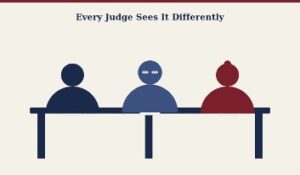
(No two judges score the same speech the same way — and that’s the point.)
Every judge scores differently. Some want crisp signposting and a strict structure. Some care most about eye contact and stage presence. Some are debate parents who know every technical term, and others are community volunteers hearing the topic for the first time. A student who only ever presents to the same coach or the same panel learns to perform for one audience. A student who has faced twenty different judges learns something far more valuable: how to read a room and adapt in the moment.
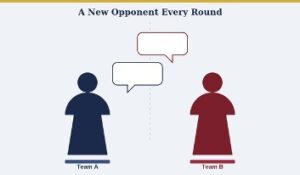
(New opponents force new thinking — no two rounds play out the same way.)
The same is true of opponents. A student who only practices against teammates gets comfortable with familiar arguments and familiar rebuttals. Put that same student across from a competitor from another school, with a different style, different strategy, and different weaknesses to probe — and suddenly they’re thinking on their feet instead of running a script. That discomfort is where real skill gets built.
This is the deeper reason competitions matter: they aren’t a test of what a student already knows. They’re an environment engineered to expose gaps, force adaptability, and reward the ability to adjust to whoever is in front of you — a judge, an opponent, or an audience. Those are the exact skills that transfer to college interviews, job interviews, and every high-stakes conversation a student will have for the rest of their life.
How Often Should Students Compete?
Growth requires repetition, but it also requires enough space between events to actually absorb the lessons from the last one. At Honor Academy, students typically get 1 to 3 tournament opportunities per month, spanning both in-person and online formats. That mix matters — in-person tournaments build poise, presence, and the ability to read a live room, while online tournaments build comfort with virtual delivery, a skill that’s only become more relevant since students now interview, present, and pitch over video as a matter of course.

This cadence gives students a steady stream of new judges, new opponents, and new rooms to read — without overwhelming their schedule or burning them out. It’s frequent enough to compound progress month over month, and varied enough that no two tournaments feel the same.
The Takeaway
If your student has been rehearsing the same speech in front of the same coach for weeks, they’ve plateaued — not because they haven’t worked hard, but because the format stopped challenging them. Competitions are what turn practice into ability. They’re where poise gets tested, adaptability gets built, and confidence gets earned — not given.